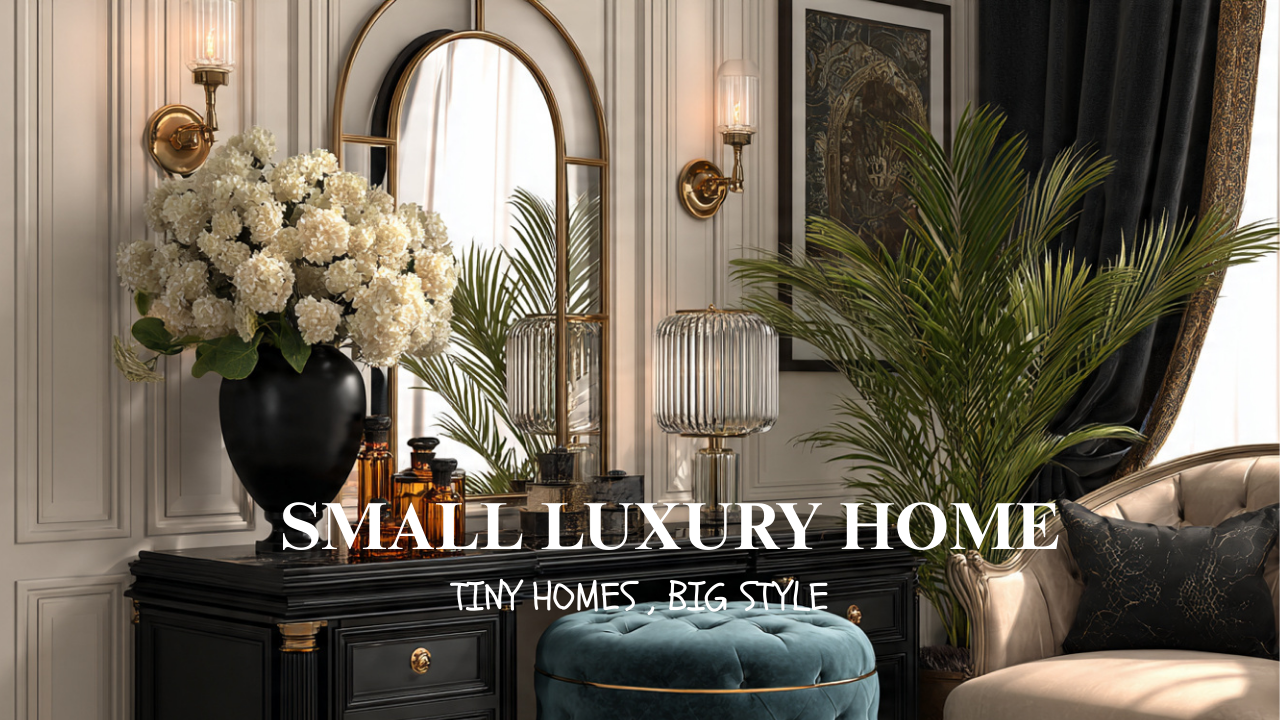
Tiny Home BIG Style | The Psychology of Small Luxury
Can a tiny home feel luxurious? Absolutely.
And the secret isn’t square footage — it’s psychology.
Small spaces don’t need more things. They need more intention.
Luxury in a tiny home is about how a space makes you feel: calm, elevated, organized, and in control. When you understand the psychology behind design — how lighting affects mood, how clutter increases stress, how symmetry creates calm — you can transform even the smallest apartment into a high-end sanctuary.
In this guide, we’ll break down the psychology of small luxury room by room:
- Entryway
- Living Room
- Kitchen & Dining Area
- Bedroom
- Closet
- Bathroom
- Balcony
- Home Office
Let’s design smarter — not bigger.
1. Entryway: The First Impression Effect
Psychology tells us that first impressions shape perception. In design, this is called anchoring — the first visual cue influences how we judge everything that follows.

In a tiny home, the entryway sets the tone.
If it’s cluttered, your brain immediately registers chaos.
If it’s clean and curated, your brain assumes the entire home is intentional.
How to Create a Luxury Entryway in a Small Space:
- Add one large mirror to visually double the space.
- Use a slim console table or floating shelf to maintain openness.
- Include one sculptural object or statement vase.
- Replace harsh overhead lighting with warm ambient lighting.
Mirrors create perceived expansion. Warm lighting signals safety. Minimal decor reduces cognitive overload.
Luxury begins the moment you walk in.
2. Living Room: Visual Breathing Room
Small living rooms often feel cramped — not because they’re small, but because they’re visually noisy.

The brain relaxes when it sees:
- Clear surfaces
- Balanced proportions
- Repetition in color
Luxury interiors are calm because they reduce visual clutter.
Psychology-Based Living Room Tips:
Choose low-profile furniture.
Lower sofas and coffee tables create the illusion of higher ceilings.
Stick to a cohesive color palette.
Repeating tones makes the room feel organized and sophisticated.
Layer texture instead of adding more objects.
Think linen curtains, bouclé cushions, matte ceramics, and warm wood tones.
Leave 20% of surfaces empty.
Empty space isn’t wasted — it’s visual oxygen.
When your living room feels breathable, it automatically feels more expensive.
3. Kitchen & Dining Area: Order Signals Abundance
Luxury kitchens don’t just look beautiful — they feel calm.

Why? Because order signals control.
Cluttered countertops increase stress and decision fatigue. Clear counters create mental clarity.
Small Luxury Kitchen Strategies:
- Decant pantry items into matching containers.
- Hide appliances when possible.
- Install under-cabinet lighting for warmth.
- Create one intentional styling moment (a tray, a bowl of lemons, or a vase).
Uniformity reduces visual interruption. The fewer distractions your brain processes, the more refined the space feels.
Dining Area Psychology
In small homes, dining spaces should feel intimate — not tight.
- Choose a round table to improve flow.
- Add upholstered chairs for comfort.
- Install a pendant light above the table to define the area.
Lighting over a dining table creates emotional warmth and signals connection.
Luxury is comfort, not size.
4. Bedroom: The Sanctuary Effect
Your bedroom is your most emotional space. It should lower stress and promote rest.

Research shows that soft textures and symmetry reduce anxiety levels.
How to Make a Small Bedroom Feel Luxurious:
Invest in an oversize headboard.
It creates grandeur, even in tight spaces.
Layer your bedding.
Use neutral sheets, a plush duvet, textured throw, and full pillows.
Create symmetry.
Matching lamps or balanced decor on each side of the bed promotes calm.
Use warm lighting only.
Avoid harsh overhead lights. opt for bedside lamps and sconces.
Plush, abundant bedding subconsciously signals wealth and security. A slightly overfilled bed always looks more luxurious than a flat one.
Your bedroom should feel like a retreat — not just a place to sleep.
5. Closet: The Boutique Illusion
A cluttered closet creates daily stress. A curated closet creates daily confidence.

Luxury closets feel intentional because they display less.
The Psychology of a Small Luxury Closet:
- Use matching hangers.
- Color coordinate clothing.
- Leave 10–15% empty space.
- Add LED strip lighting.
- Include a small tray for accessories.
Negative space increases perceived value. When items aren’t crowded, they look more important.
Even a tiny wardrobe can feel like a high-end boutique with proper lighting and organization.
Luxury is clarity.
6. Bathroom: Spa Psychology
Bathrooms are emotional reset zones. Even small ones can feel like private spas.

Small luxury bathrooms focus on three psychological triggers:
- Warm lighting
- Natural texture
- Minimal surface clutter
How to Elevate a Tiny Bathroom:
- Roll white towels instead of stacking them.
- Use refillable soap dispensers.
- Add one wooden stool or tray.
- Incorporate a single plant.
- Use large-format tiles to reduce grout lines.
Fewer grout lines mean less visual interruption — which equals more calm.
Decanting products into uniform containers instantly removes chaos.
Spa-like bathrooms feel expensive because they are simplified.
7. Balcony: The Escape Illusion
Even the smallest balcony can dramatically increase perceived space.

The key? Define its purpose.
When a balcony feels intentional, your brain registers your home as larger because it has “another room.”
Small Balcony Luxury Tips:
- Add an outdoor rug to anchor the space.
- Keep seating limited to two chairs maximum.
- Use lantern lighting for softness.
- Incorporate vertical greenery to draw the eye upward.
Purpose creates lifestyle. Lifestyle creates luxury.
Your balcony doesn’t need to be large — it needs to feel like an experience.
8. Home Office: The Power Zone
Working from home in a small space can blur boundaries and increase stress.

Luxury in a home office is about psychological separation.
Even if your office is just a corner of a room, it must feel defined.
The Psychology of a Small Luxury Home Office:
Clear desk surface.
Clutter increases cognitive load.
Add a statement chair.
Comfort enhances authority and confidence.
Use vertical storage.
Drawing the eye upward creates the illusion of height.
Layer your lighting.
Combine a desk lamp with ambient lighting to reduce eye strain.
Create a visual anchor behind your desk.
Artwork, wallpaper, or paneling signals importance.
Your brain needs environmental cues. When your workspace feels elevated, your productivity increases.
Luxury isn’t excess — it’s intention.
The Core Principle: Small Luxury Is Emotional
Here’s what truly makes a tiny home feel luxurious:
- Visual breathing room
- Warm, layered lighting
- Soft textures
- Organized surfaces
- Defined zones
Luxury is not about having more.
It’s about removing what overwhelms.
When each room in your small home feels intentional, your entire lifestyle shifts. You feel calmer. More focused. More in control.
And that is the real psychology of small luxury.
Tiny home.
Big style.
Maximum intention.
Leave a Reply